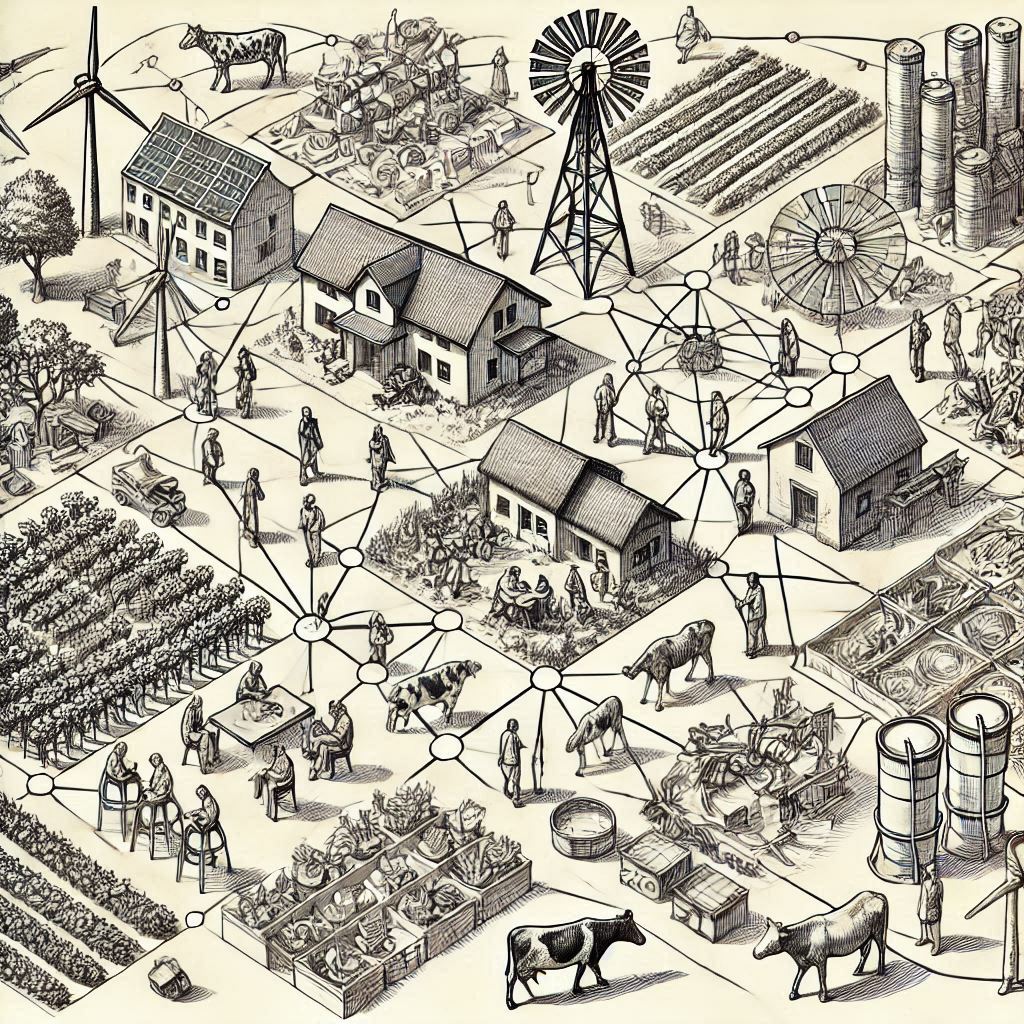
Network Structure
The Agorist Network is designed for clarity, security, and progressive engagement. Understanding its structure and the different ways you can interact is key to navigating your journey within it.
The Welcome Desk
The Welcome Desk serves as your initial point of contact for anyone eager to learn more about our network and the pathways to a new life within it. For detailed information on getting started and connecting with network hosts, visit our dedicated Welcome Desk page.
Understanding the Realms
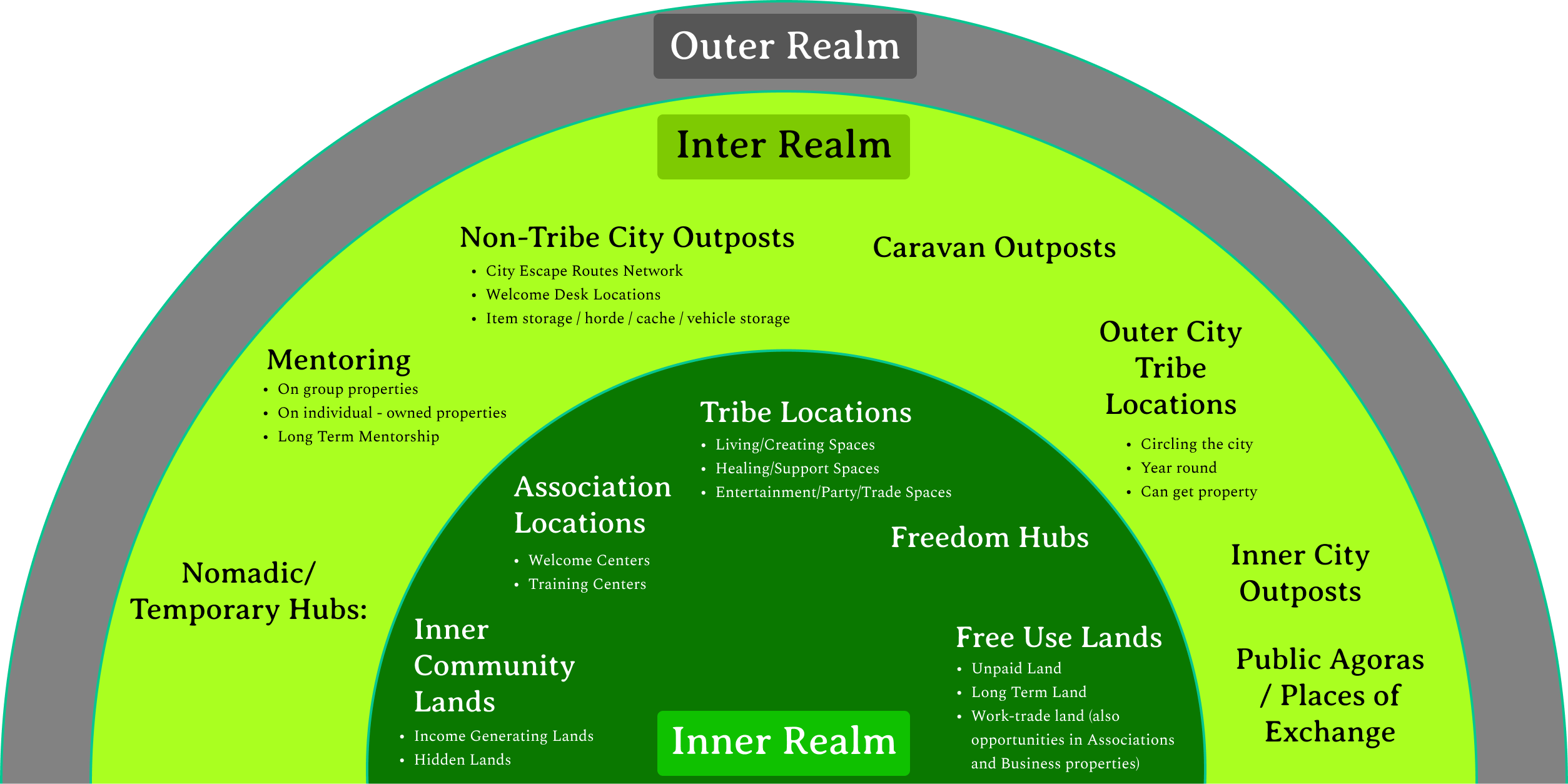
Our network operates across distinct "realms," each with unique characteristics and levels of engagement designed to protect our principles and foster growth:
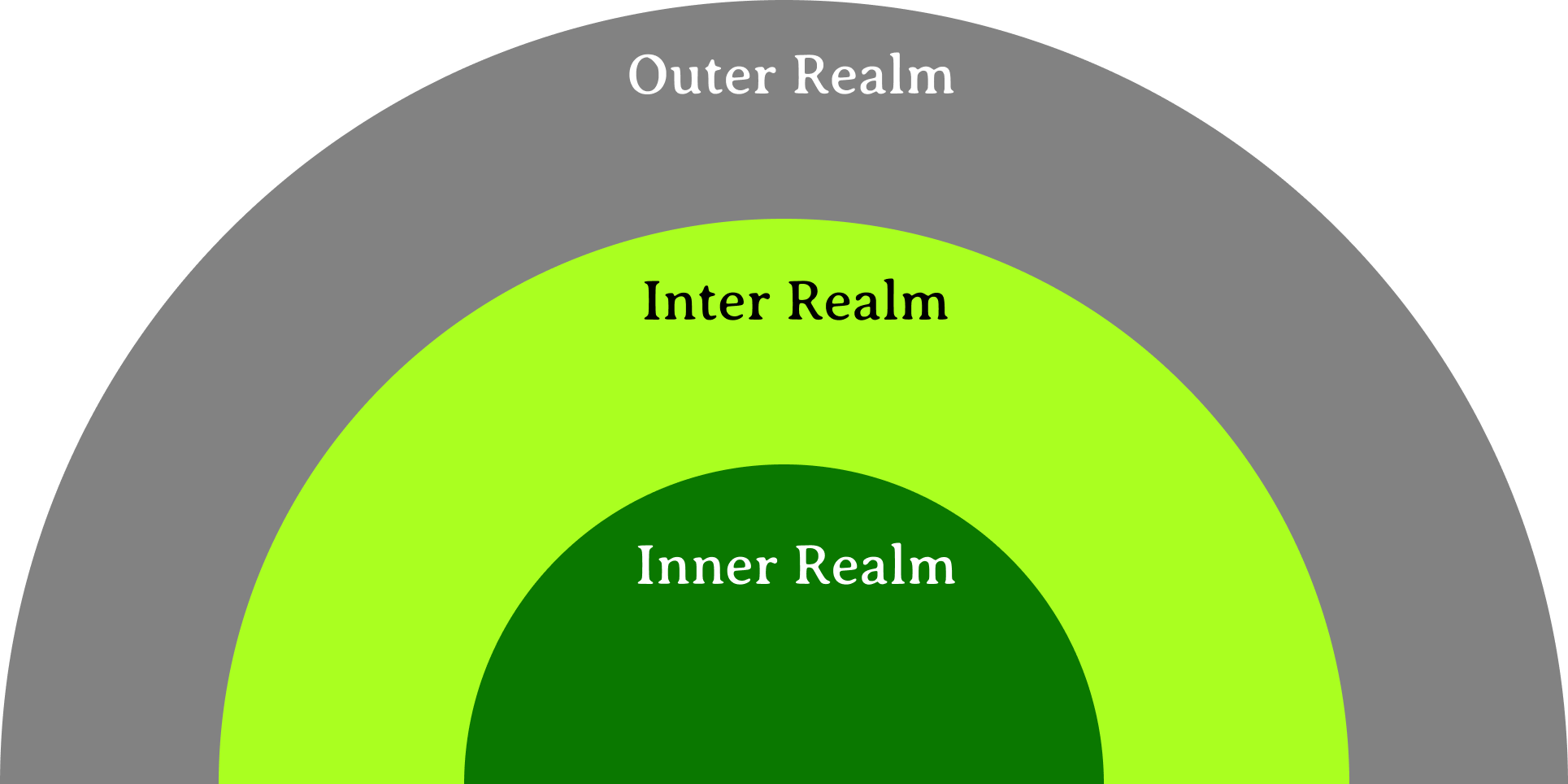
Inner Realm:
The fundamental rule here is no rulers and
absolute adherence to the Non-Aggression Principle
(NAP). This space is free from coercion. We
protect certain private spaces for those who have
expressed a clear understanding of our network's
principles and the NAP. While risks are a part of
life, we aim to safeguard what's essential.
Entrance to the network's Inner Realm is managed
through Admissions. You can establish yourself as
a trusted member by connecting with a Network
Host, joining a caravan, or studying materials in
The Library to gain the necessary knowledge. Feel
free to apply at any time.
Inter Realm:
Wherever a caravan travels becomes the Inter Realm. Our buses, adorned with clear signage, often do much of our activism, making our presence known in outer city outposts and other locations. This realm is designed to help people transition and understand that living here isn't an escape from a lack of meaning, but a deliberate path towards finding one's best possible vocation and living situation.
Outer Realm:
The Outer Realm is where we engage in outreach. This is the space you occupy when you're "behind enemy lines," operating in areas where agorists are few, and maintaining even a bubble of freedom requires constant vigilance.
Structuring Your Network: Levels of Engagement
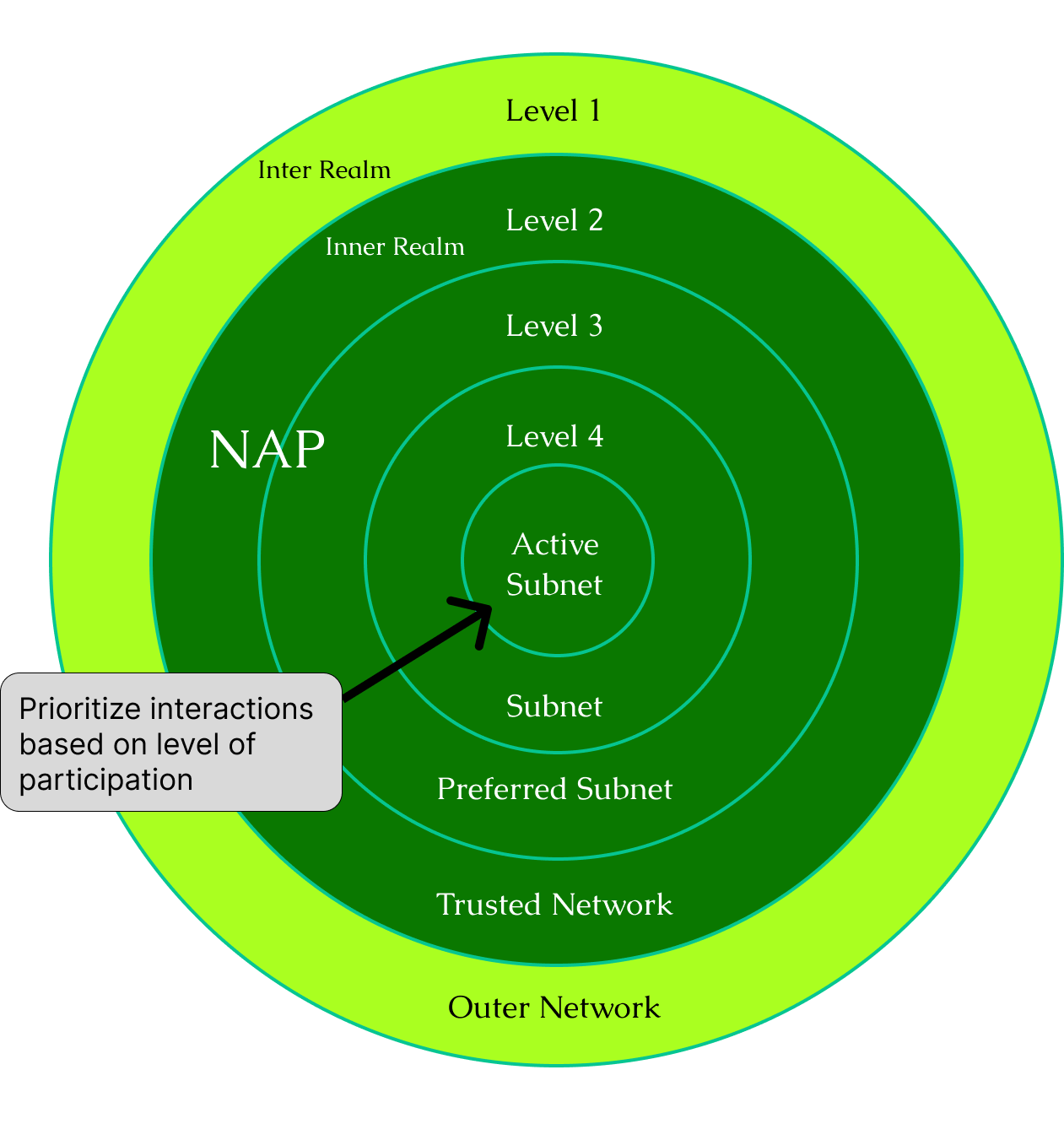
Your journey within our network can deepen through distinct levels, each signifying a greater alignment with our values and a higher degree of trust and shared purpose:
Levels
-
Level 0: The Uninitiated
Individuals who do not value freedom sufficiently to allow others to peacefully coexist. -
Level 1: The Outer Network
People who are willing to trade and interact with our network. -
Level 2: Trusted Network
Those who respect the Non-Aggression Principle (NAP), the self-defense principle, and refrain from advocating for or taking direct action toward the destruction or restriction of your freedom to peacefully conduct yourself and your property as a physical extension of yourself, over which you (the owner) alone possess authority. -
Level 3: Preferred Network
Those from Level 2 who also prioritize interactions with individuals aiming to make freedom more accessible to others. It's a bonus if they can articulate a path towards freedom from coercion in this lifetime. -
Level 4: The Subnet
A subnetwork within the larger network, comprising those who actively seek to grow and strengthen the subnet. -
Level 5: The Active-Subnet
Includes those in your subnet with whom you interact and communicate with on a regular basis. This represents the innermost circle of consistent engagement.
Agorism and Networks
Your “Network” is a physical manifestation of your interactions. Interactions with intention can result in networks with intention, and the clusters and groups of individuals that result therefrom.
Your network already exists. Now, identify your trusted “subnet”, or network of individuals you have established trust with, who share your intention and objective of creating a more free world for themselves and others, and whom you have established sufficient moral and/or ethical common ground with. If they are a potential threat to you or yours, confront them about it and establish healthy boundaries with them. If they do not respect your boundaries, do not consider them a part of your trusted subnet.
Essentially, we are advocating individuals establish decentralized (enclaves), both localized and dispersed, aimed at making freedom more accessible for others. This guide will go into detail about how networks will solve the issue of scaling up from small communities to places that have larger populations.
What has anarchy looked like in action?
The moral philosophy of voluntaryism is not required to posit a working solution for how the world would look without a government as that will be created organically by those involved. Still, there are many resources on times past and present where anarchy has existed or exists.
The concept of a society functioning without a centralized, coercive state might seem radical in today's world, but history offers numerous compelling examples. For millennia, human communities have successfully organized themselves, resolved disputes, and thrived through voluntary association, decentralized governance, and customary law, proving that sophisticated social order doesn't require a monopolistic authority.
For detailed historical case studies of flourishing stateless societies—including the Icelandic Commonwealth, Xeer legal system, Brehon Law, and others—explore our comprehensive examples page in The Library.
Link to Anarchy Examples
Strength in Numbers
One of the most practical ways to reduce reliance on state police is through coordinated community response. When disputes or incidents occur, showing up as a group of trusted neighbors creates accountability and often de-escalates situations more effectively than armed authorities.
This can take many forms: informal neighborhood watch networks, rapid response communication channels, or simply the understanding that your subnet members will support each other when needed. The presence of multiple witnesses and mediators often prevents conflicts from escalating, while the absence of state involvement keeps situations from turning into criminal matters with life-altering consequences.
Start small: establish communication with 3-5 nearby network members or trusted neighbors who share your values. Create a simple way to reach each other quickly. Practice showing up for each other in non-emergency situations first—helping with projects, resolving minor disputes, building trust. This foundation makes coordinated response natural when it matters most.
Putting Structure Into Practice
Understanding the Network's structure is just the beginning. The real value comes from actively engaging with it—building your subnet, progressing through trust levels, and contributing to the strength of both Inner and Inter Realms.
Remember that these structures exist to serve freedom, not restrict it. They're tools for building trust, protecting what matters, and scaling voluntary cooperation from small groups to large networks. Your participation shapes how these structures evolve.
Next Steps:
- Visit the Welcome Desk to understand trust levels in detail
- Explore CaravAnarchy to see mobile community structure in action
- Read Admissions Portal to learn how to access the Inner Realm
- Check Security Mesh for how decentralized protection works