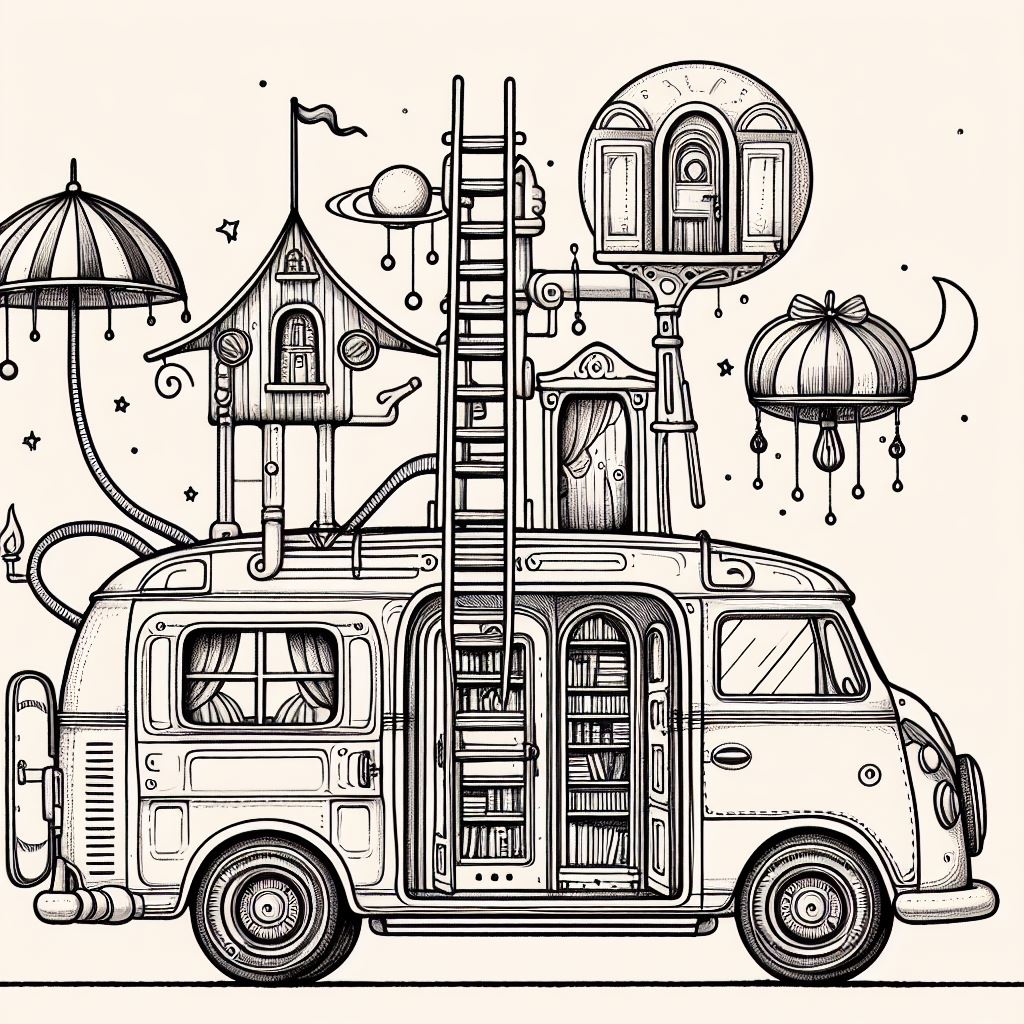
Nomadic Markets & Caravans
Freedom on Wheels
This page explores the concept and benefits of mobile, agorist marketplaces and communities. Caravans represent one of the most powerful expressions of counter-economics in action—traveling groups that bring voluntary exchange directly to people while demonstrating that thriving communities don't require fixed locations or state infrastructure.
If you've been wondering how to spread freedom beyond your immediate area, how to live with minimal overhead costs, or how to build resilient community while maintaining mobility—this is your blueprint.
Key Benefits of Nomadic Markets & Caravans
At its core, adopting a nomadic market and caravan model offers profound advantages for individuals and the broader network seeking genuine freedom:
Core Advantages:
- Enhanced Security & Resilience: By maintaining mobile support systems and diversified connections, individuals build a robust shield against localized threats and vulnerabilities. You can't be pinned down if you're always moving.
- True Financial & Time Freedom: Significantly reduced overhead costs translate into less time spent working a conventional job, freeing up invaluable hours for personal pursuits and community building. When your home moves with you, you don't pay rent or mortgages.
- Unparalleled Flexibility & Adaptability: Bring your home and livelihood directly to opportunities, choose your climate, and position yourself near loved ones, events, or resources as needed. The market comes to you, and you go to the market.
- Dynamic Community & Connection: Continuously engage with diverse groups, fostering a broader and more resilient network of like-minded individuals, moving beyond the limitations of stationary social circles. Your community travels with you.
- Expanded Economic Opportunities: Actively participate in growing the parallel economy, finding new markets for goods and services, and empowering others to redirect their income towards agorist sources. You're not just participating in counter-economics—you're spreading it.
Strategic Mobility: Beyond the Bug-Out Plan
Nomadic living offers a supreme strategy for individual empowerment and resilience, far exceeding the scope of a mere "bug-out" plan. By maintaining supplies, establishing trade relationships, and developing robust social networks across multiple communities, individuals can construct a level of long-term security and protection from future threats that is often beyond the reach of those tied to a single location.
While stationary individuals can gain some benefits through bursts of travel, it's crucial to remain realistic about the inherent vulnerabilities of investing all energy into one location that may become compromised. Cultivating the ability to adapt and survive long-term at a secondary location, or fully embrace nomadism, is a wise step towards true freedom and preparedness.
Why Mobility Matters:
- No single point of failure: If one location becomes dangerous or unviable, you have options
- Distributed resources: Supplies, relationships, and opportunities spread across regions
- Escape routes built in: You're always ready to move if necessary
- Local knowledge everywhere: You know multiple areas well enough to thrive in them
- Network effects: Each location you operate in strengthens your overall position
Embracing Mobile Living: Beyond the Stationary Norm
Many who've lived a nomadic lifestyle in the past eventually settle down, often citing the comforts of a stationary home: a consistent bed, virtually endless running water and electricity, a private bathroom, and ample storage. However, for many, these amenities come at an unseen cost—often requiring a commitment to a 9-to-5 lifestyle that can compromise personal morals, values, and precious time.
The exorbitant financial demands of conventional housing can drain one's energy and attention, leaving little for meaningful personal pursuits beyond basic survival and passive entertainment. Yet, a less-acknowledged truth is that mobile living offers its own unique set of luxuries:
The Luxuries of Mobile Living:
- Financial & Time Freedom: Significantly lower expenses mean less time spent working, freeing up invaluable hours for personal passions and network building. Your overhead is a fraction of stationary living.
- Unparalleled Flexibility: The ability to bring your home directly to events, choose your climate, and position yourself near loved ones or opportunities. Follow the seasons, follow opportunities, follow your interests.
- Conscious Living: Direct awareness of water and electricity consumption fosters a prudent and efficient lifestyle. You understand your resource use intimately.
- Freedom from Drudgery: Enjoy freedom from typical household chores like constant toilet cleaning if your setup is simplified. Minimalism reduces maintenance.
- Dynamic Community: Rather than being stuck with the same neighbors, you can choose to travel alongside or meet up with those who truly resonate with your goals. Your neighbors are chosen, not assigned.
- True Autonomy: The ultimate luxury is knowing that if a situation becomes undesirable, you genuinely have the freedom to leave it behind. Exit is always an option.
Overcoming Fears on the Road
Many common fears associated with life on the road can be significantly eased by traveling in groups and being part of a supportive network. A major concern for individuals is often the ability to meet new people, make lasting friends, or even find a soulmate while constantly moving.
To address these very real social needs, we are actively creating a robust network of social hubs. These hubs will be strategically located wherever our caravans travel, ensuring they're easily accessible to both long-term nomads and those just passing through. This provides consistent opportunities for connection, fostering a vibrant community on the move.
Social Structures That Travel:
- Regular meetup points: Caravans establish predictable gathering locations
- Festival circuits: Annual events where the nomadic community reconvenes
- Digital coordination: Apps and platforms for locating other members
- Shared skills & teaching: Ongoing education within the traveling community
- Collaborative projects: Working together on meaningful initiatives
Building Community on the Move: The Caravan Solution
A common reason some nomads eventually return to stationary life is the perceived difficulty in finding sustained meaning, direction, or lasting community on the road. Many independent travelers embrace their journeys for self-discovery, exploring nature's beauty, and meeting new people without the burden of long-term commitment. While this fulfills a vital need for personal freedom, it doesn't always provide the long-term stability and deep connections essential for a rich and full life.
This highlights a critical gap: there aren't enough structured opportunities for meaningful, respectable, and community-oriented nomadic living. The ideal future involves a multitude of traveling caravans that provide consistent anchors of stability and community. Within these caravans, individuals can come and go as desired, knowing they don't have to return to stationary life as the only path to building profound relationships and shared purpose.
What Caravans Provide:
- Consistent core group: Familiar faces and deep relationships even while traveling
- Shared infrastructure: Resources, tools, and systems that benefit everyone
- Collective security: Safety in numbers, mutual protection
- Economic cooperation: Pooled purchasing power, shared costs, collaborative ventures
- Purpose and meaning: Working together on projects bigger than any individual
- Flexibility to join/leave: Members can take breaks or move between caravans
A Vocation for Van-Lifers
Currently, platforms like Craigslist provide basic services for buying and selling items. However, the agorist network introduces a more complex and empowering tool: the Bounty Board. This system allows individuals to craft their own "jobs" by providing for other people's weekly needs.
Anyone joining the network is encouraged to post detailed descriptions of the goods and services they provide for themselves and purchase every week. These needs are posted semi-anonymously on a map. From there, someone looking to start a new delivery route can construct their system based on the needs of those in their chosen area.
Example: The Egg Delivery Route
If ten people need a dozen eggs per week and currently buy them from a grocery store, an individual with a vehicle could find a local egg producer capable of supplying those ten dozen. If such a producer doesn't exist, the potential egg deliverer could approach local producers, demonstrate the demand (even securing pre-orders), and invest a small amount to get the delivery system up and running.
This model empowers individuals to create their own schedules, with negative experiences being reported and dealt with seriously within the network. You're not working for a boss—you're fulfilling actual needs in your community.
When a caravan enters an area, we typically stay for a month. This extended stay allows people in our caravan to network with locals, raise awareness of our marketplace, and build familiarity. It gives individuals newly introduced to agorism time to engage with our presence and more likely find the time to come to our market, which can be hosted constantly if those in the caravan desire to do so full-time.
The Nomadic Caravan Model
This is how a nomadic caravan typically operates within the agorist framework:
- One or more full-time traveling caravans are formed with committed members
- A caravan sets up a pop-up agorist marketplace on the outskirts of a city for approximately one month at a time
- People from the caravan enter the city and spread the word through various networking and advertising techniques about the alternative marketplace
- They offer opportunities for alternative ways of living, much like setting up camp on the outskirts of a controlled city to wage economic war
- The caravan aims to leave behind a self-sustaining group committed to holding marketplaces and helping those in the city transition into a full-time agorist lifestyle
- The caravan moves to the next location, repeating the process and building a network of connected communities
Think of it as economic missionaries—but instead of converting people to a religion, you're showing them a practical alternative to state-controlled living. Each city you visit becomes a node in the growing network.
Exploring Nomadic Markets in Action
An example of a nomadic agorist caravan is CaravAnarchy, a traveling community that focuses on building business and social networks with people seeking to bring about a more free way of living for themselves and others.
CaravAnarchy demonstrates all the principles discussed here: mobile living, temporary marketplaces, community building, economic empowerment, and spreading counter-economics through direct demonstration. If you're interested in seeing how this works in practice or potentially joining, visit the CaravAnarchy page for details.
Next Steps & Get Involved
Inspired by the potential of nomadic markets and caravan life? Take the next step to learn more and connect with our network:
- Dive deeper into our specific operational model and daily life on the CaravAnarchy page
- Discover opportunities to offer or fulfill needs by exploring the Bounty Board
- Learn about the practical steps for making the transition to a mobile lifestyle on the Transcending Location page
- See what equipment you'll need in the Gear Guide
- Connect with current nomads in The Adventurer's Hall