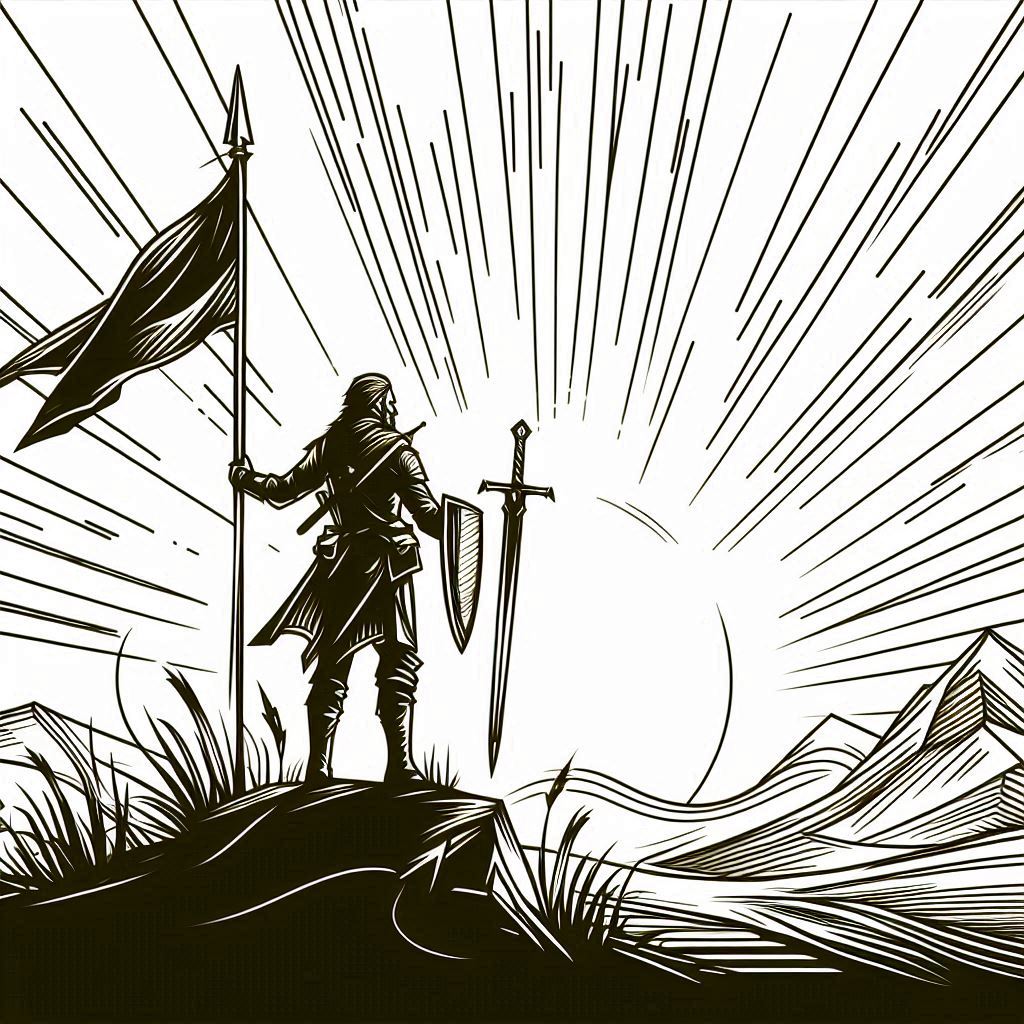
Freedom Guard
Personal Security and Self-Reliance Training
Form your own guard, and become knowledgeable in security, self-defense, wilderness survival, emergency preparedness, first aid, food acquisition skills (like trapping), shelter construction, and more.
Freedom Guard is the Network's training framework for developing the skills needed to protect yourself, your community, and your freedom. It's not a centralized organization with commanders and subordinates—it's a distributed knowledge network where individuals develop competencies, earn recognition through demonstrated ability, and teach others.
Get experience at training lands where you can practice skills in safe, supportive environments before you need them in real situations.
Goal
To equip individuals with the knowledge they need to maximize their individual freedom and liberty through practical skills and preparedness.
Freedom Guard's aim is to create intentional, focused, coordinated, and extremely skilled groups of individuals who can solve problems quickly, efficiently, and safely. When you have the skills to take care of yourself and others, you don't need to depend on institutions that demand your obedience in exchange for "protection."
Teach classes once you have five specializations. Knowledge multiplies when shared. Every Guardian who achieves proficiency in five areas becomes a teacher, spreading knowledge throughout the Network.

What is Freedom Guard?
Freedom Guard is both a philosophy and a practical training system. It recognizes that true security comes not from delegating your safety to others, but from developing your own capabilities and building networks of mutually skilled individuals.
Unlike traditional security forces with rigid hierarchies and blind obedience, Freedom Guard emphasizes:
- Individual competence: Every person capable of assessing and responding to threats
- Distributed knowledge: Skills spread throughout the network, not concentrated in specialists
- Voluntary coordination: Working together because it's effective, not because someone commands it
- Cross-functional training: Everyone has multiple capabilities rather than single narrow expertise
- Continuous learning: Skills are developed and refined throughout life
It is vital that members of any team have basic cross-functional training and experiences. A team where everyone can do a little of everything is more resilient than one where individuals are hyper-specialized. If the medic goes down, who treats wounds? If the navigator is incapacitated, who finds the way? Freedom Guard ensures everyone has foundational competence across critical domains.
Badges: Recognition for Demonstrated Competence
Freedom Guard uses a badge system to recognize skills and accomplishments. Unlike state credentials that require permission and payment, badges are earned through demonstrable competency—you know how to do it, you prove it, you earn recognition.
Based on Survival
- Wilderness Skills: Navigation, shelter building, fire making, water procurement, foraging
- Self-Defense: Martial arts, situational awareness, de-escalation, physical defense techniques
- Food Acquisition: Hunting, fishing, trapping, foraging, food preservation
- Shelter Construction: Emergency shelters, long-term structures, weatherproofing, site selection
Based on Self-Sufficiency
- Van Living Skills: Mobile habitation, resource management, off-grid systems
- Bus Driving/Crew: Operating large vehicles, group coordination, mobile community management
- Hitchhiking/Train Hopping: Ultra-low-budget mobility, reading situations, safety protocols
- Liberating Stolen Resources: Recovering wealth extracted through taxation and coercion (advanced, high-risk)
Based on Conflict Resolution
- Peaceful Resolution: Maintaining good relationships, preventing escalation, finding win-win solutions
- Mediation Skills: Helping others resolve disputes without violence
- "Teardrop Crew" Badge: Earned by successfully resolving an argument or conflict that could have escalated (humor in the badge name acknowledges that conflict happens—what matters is how you handle it)
Based on Ideology
- NAP Adherence: Demonstrated commitment to Non-Aggression Principle in all interactions
- Defined Worldview: Clear articulation of your values and goals—knowing what you want and need
- Philosophical Competence: Ability to explain and defend voluntaryist principles

Forming Your Own Guard
A "guard" can be one person—you—or a team of individuals committed to mutual protection and skill development. The process is the same whether you're training solo or forming a group.
Becoming Knowledgeable
Start by developing foundational competence in three core areas:
- Security: Threat assessment, perimeter defense, surveillance detection, operational security
- Self-Defense: Physical skills for protecting yourself and others from aggression
- Preparedness: Having supplies, plans, and skills ready for emergencies
Getting Experience
Training Lands: Network properties dedicated to skill development where you can practice in safe environments. These properties offer:
- Space for wilderness survival practice
- Facilities for self-defense training
- Equipment and tools for learning
- Experienced instructors and mentors
- Community of learners at various skill levels
Three Tiers of Progression
- Scout: Beginner level—learning foundational skills, developing awareness, building confidence
- Pioneer: Intermediate level—proficient in core skills, able to teach basics to others, expanding into specializations
- Guard: Advanced level—mastery of multiple domains, capable of protecting self and others, active teacher and mentor
Specializations
Once you have foundational competence, develop specializations in areas that interest you or meet Network needs:
- Wilderness Survival: Deep expertise in living off-grid and off-land
- Emergency Preparedness: Disaster response, supply management, coordination
- First Aid / Medical: Trauma care, field medicine, long-term health maintenance
- Communications: Encrypted systems, radio operations, mesh networks
- Tactics: Strategic thinking, threat assessment, defensive operations
- Weapons Proficiency: Safe, effective use of defensive tools
Levels of Freedom Guard
Advancement through Freedom Guard is based on demonstrated competence and contribution, not time served or paperwork completed. The three levels correspond to increasing ability and responsibility.
Level One - Cardinal
Required Proficiencies:
- Teach Philosophy of Freedom: Can explain voluntaryist principles clearly to newcomers
- One Core Skill from a Guard: Demonstrable competence in at least one of the foundational areas (Security, Self-Defense, or Preparedness)
At this level, you're transitioning from student to practitioner. You understand why freedom matters and have developed at least one practical skill to protect it.
Level Two - Fixed
Required Proficiencies:
- Teach Philosophy of Action: Can guide others from theory to practice—how to actually live free
- Utilization of the Network: Understand how to leverage Network resources effectively and contribute value back
- Multiple Core Skills: Proficient in at least two of the three foundational areas
At this level, you're not just capable yourself—you're making others more capable. You understand how the Network functions and how to be maximally useful within it.
Level Three - Mutable
Required Proficiencies:
- All Core Skills: Mastery of Security, Self-Defense, and Preparedness
- Teach Philosophy of Outreach: Can effectively spread voluntaryist ideas and recruit others into the Network
- Five+ Specializations: Deep expertise in multiple domains beyond the fundamentals
- Active Teaching: Regularly training others and expanding the knowledge base
At this level, you're a force multiplier. Your skills, knowledge, and leadership significantly increase the Network's overall capability. The "Mutable" designation recognizes that mastery means adapting to changing circumstances—you don't rigidly follow protocols, you intelligently respond to situations.

Getting Started
Ready to begin your Freedom Guard journey? Here's your path:
- Assess your current skills: What can you already do? What do you need to learn?
- Choose your first focus area: Security, Self-Defense, or Preparedness—pick one to start
- Find resources: Books, online courses, local instructors, Network training lands
- Practice regularly: Skills atrophy without use—schedule consistent training
- Connect with others: Find training partners, join or form a guard, learn from those ahead of you
- Earn your first badge: Demonstrate competence and get recognized
- Teach what you learn: As soon as you know something well enough, share it
Don't wait until you're "ready" to start. You become ready by doing. Begin with what you can do today, even if it's just reading a book on wilderness survival or practicing situational awareness during your commute.
Training Resources
The Network provides multiple pathways for developing Freedom Guard skills:
Physical Training Locations:
- Training Lands: Dedicated properties for skill development
- Network Host Properties: Many hosts offer specific training opportunities
- Guild Facilities: Protection Guild and other relevant Guilds provide specialized training
Learning Methods:
- Direct Instruction: Learn from Level 2 and 3 Guardians
- Peer Training: Practice with others at similar skill levels
- Mentorship: Extended guidance from experienced Guardians
- Self-Study: Books, videos, online courses supplemented by practical application
- Immersion: Extended stays at training lands or with skilled hosts
Your Next Steps
Ready to connect with hosts who can help you develop skills? Visit Network Hosts to find training opportunities.
Want to understand the broader security context? Review Security Mesh to see how individual preparedness fits into collective defense.
Looking for practical gear recommendations? Check the Gear Guide for equipment suggestions.
Interested in the Protection Guild specifically? See Guilds for information on all skill-based associations.